
Glaucoma is a serious eye condition that can lead to blindness if left untreated. Read on to find out more about glaucoma.
What is glaucoma?
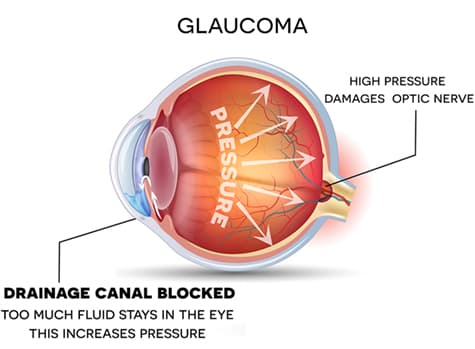
Glaucoma is a condition that can slowly cause you to lose your vision. There are many forms of glaucoma, but the most common form is open-angle glaucoma.
In open-angle glaucoma, the openings where fluid drains out of your eye become clogged. Pressure can increase in your eye, and that can damage your optic nerve.
In low-tension or normal-tension glaucoma, glaucoma develops even though there is normal pressure. They may have optic nerve damage and a narrower field of vision.
In congenital glaucoma, a baby is born with a defect that prevents the eye from draining properly.
What are the risk factors for glaucoma?
The chances of developing open-angle glaucoma increase as you get older. It is much more common in people over the age of 60.
The condition also runs in families. African Americans and Latino individuals are also more likely to develop the condition.
Some other factors might be related to glaucoma. These include high blood pressure, being nearsighted, and having thin corneas.
What are the symptoms of glaucoma?

Most forms of glaucoma develop so slowly that you are not likely to notice them. In most cases, by the time glaucoma is noticed, vision damage has already occurred.
Open-angle glaucoma is the most common form of the condition. With this condition, the first symptoms are that you slowly lose your side vision.
Your central vision remains clear until the condition is quite advanced.
One form of glaucoma called angle-closure glaucoma does come on quickly. In this condition, the drainage channels become blocked and the fluid can’t drain out of your eye.
The pressure in the eye quickly goes up. When that happens, you may experience sudden blurred vision, severe pain, and vomiting.
If you experience those symptoms, contact Huffman & Huffman, P.S.C. immediately. Angle-closure glaucoma is a medical emergency!
Are there steps I can take to reduce my chances of developing glaucoma?
Yes. One of the most important things you can do is to have a comprehensive eye exam, including eye dilation.
For a dilated eye exam, the doctor will put drops in your eyes to widen your pupils.
Dilating your pupils allows your eye doctor to check your optic nerve and retina for damage. Such an exam allows your eye doctor to find the condition early.
With early diagnosis, you’re more likely to prevent damage to your eyesight.
Are any treatments available for glaucoma?

Several treatments are available after early diagnosis.
When glaucoma is in the early stages, your doctor may prescribe eye drops. These eye drops may help relieve the pressure in the eye by causing the eye to produce less fluid. Others help the fluid to drain better.
If the condition is more advanced, your eye doctor may suggest laser treatment. The doctor will use a laser to enlarge the drainage holes to drain more fluid.
If other treatments fail, your eye doctor may use conventional surgery. During surgery, the doctor will create a new channel where fluid can leave your eye.
Conventional surgery is also used on children with congenital glaucoma.
If you’re looking for glaucoma treatment in London and Somerset, Kentucky, Huffman & Huffman, P.S.C. is here to help! With five locations in southeast Kentucky, there’s a location that will work for you.
Schedule an appointment with Huffman & Huffman, P.S.C. today!